The Allhands Checklist: What to Think About Before You Hit Record
Production
,
by
Kyle Janus
,
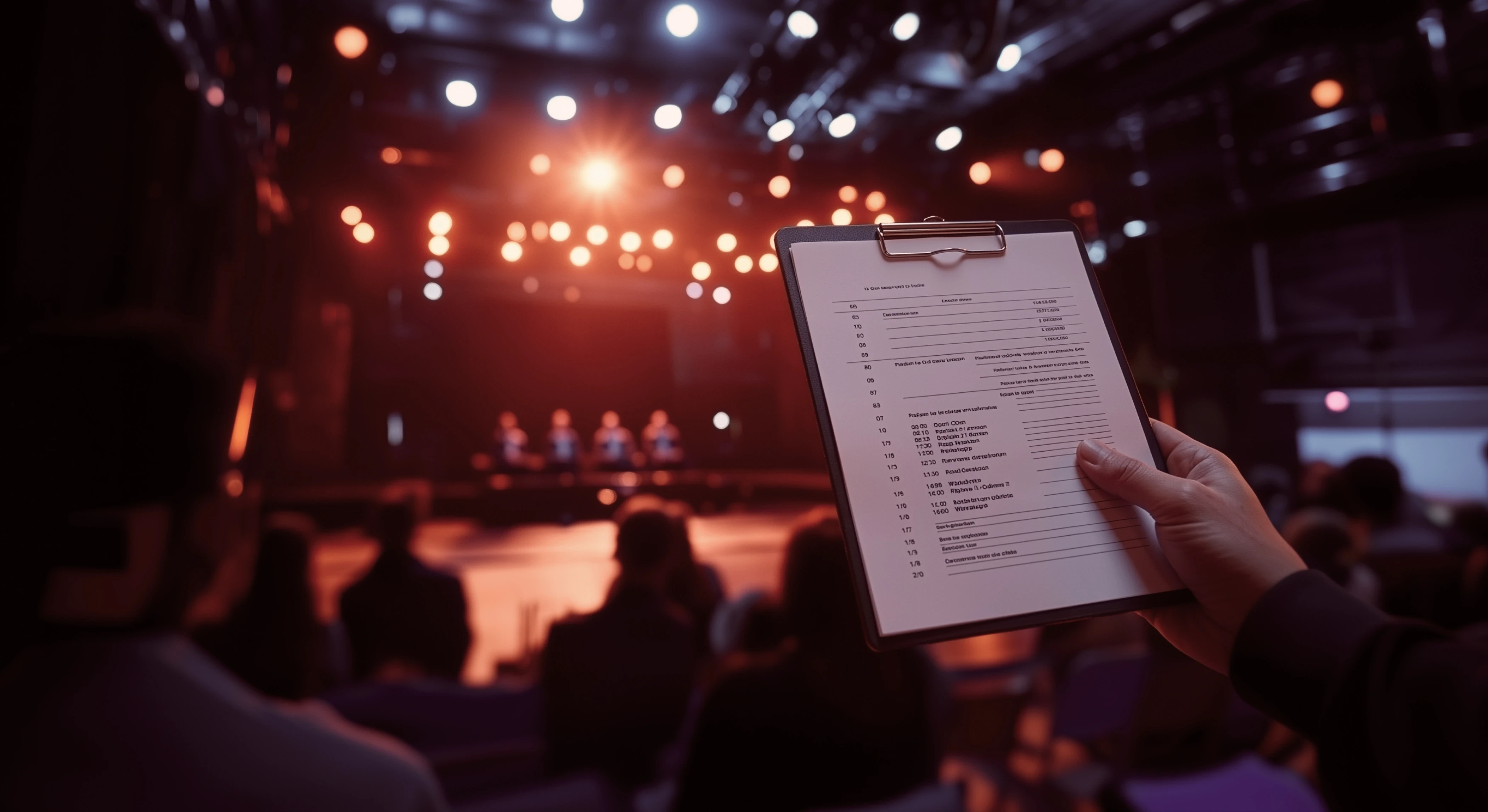
Planning a company all-hands is one of those jobs that looks deceptively simple from the outside and completely different from the inside. The agenda comes together. Leadership is aligned. The message is clear. And then, somewhere between "we're ready" and "we're live," a dozen things quietly determine whether this one lands or just... happens.
The difference between a forgettable all-hands and one people actually talk about the next day rarely comes down to the content. It comes down to the preparation. Specifically, the preparation that happens around the content. The experience layer. The parts that audiences feel even when they can't articulate why.
Consider this your pre-event checklist. Not the agenda. The everything else.
Before You Plan Anything, Answer These Questions
The best-produced events in the world still fall flat if the fundamentals aren't answered honestly upfront. Before you touch a run of show or book a production team, get clear on these.
Who is this for, really? Not the org chart answer. The real answer. Is this primarily for frontline employees who rarely hear from leadership? For a remote workforce that needs connection? For a team navigating change? The audience shapes everything from tone to format to length.
What is the one thing you want people to walk away with? One thing. Not five. If your all-hands has five equally weighted messages, it effectively has none. Clarity of purpose at the top makes every production decision downstream easier.
Live, recorded, or both? This matters earlier than most teams think. A live event optimized for a simultaneous global audience looks very different from one designed to be watched asynchronously by thousands of employees across time zones. Know this before you design anything.
The Production Checklist
Once the strategic questions are answered, here is where the experience actually gets built.
Set and environment: Where is this happening, and does it look like you? A branded set, even a minimal one, signals that this was designed. A kitchen background or a generic office does the opposite. The visual environment sets the tone before anyone speaks.
Lighting: This is the single most underestimated production element in internal video. Good lighting makes speakers look confident and present. Bad lighting does the opposite, and no amount of good content overcomes it.
Audio: If people can't hear it clearly, nothing else matters. Lapel mics, room acoustics, a proper sound check. These are not optional extras. They are the floor.
Run of show: A detailed, minute-by-minute document that every stakeholder has reviewed and agreed to. Not an agenda. A run of show. Transitions, speaker cues, video playback moments, Q&A windows. All of it, mapped.
Speaker preparation: Your executives are not automatically comfortable on camera just because they are comfortable in a room. Camera presence is a skill. A brief rehearsal, a prompter if needed, and clear guidance on where to look makes a visible difference.
Graphics and brand assets: Lower thirds, title cards, logo placements, transition graphics. These should be built before the day, reviewed before the day, and tested before the day. The live event is not the time to discover a typo in the CEO's name.
Backup plans: What happens if the stream drops? What happens if a speaker loses audio? What is the contingency for a late-joining executive? The best production teams have answers to these questions before they are ever needed.
The Distribution Checklist
The event itself is only part of the picture. Where does it go afterward?
Recording and archiving: Is the full event being captured in a quality format? Not a Zoom cloud recording. A proper capture that can be edited, clipped, and distributed with intention.
On-demand access: Where will employees who missed the live event watch it? Is it findable? Is it on-brand? A video buried in a shared drive is a video most people will never watch.
Content repurposing: A single all-hands event can yield a highlights reel, individual speaker clips, a written recap, and social-ready moments if someone plans for it. Most teams don't plan for it and leave significant value on the table.
Feedback mechanism: Did it land? A short post-event survey, a pulse check, a comment thread. Something that closes the loop and gives you data to make the next one better.
The Platform Question
All of the above is significantly easier when you're working with a platform built to handle it. Not a general-purpose video conferencing tool pressed into service as a broadcast platform. Not three different vendors managing production, streaming, and hosting separately.
The best all-hands experiences today are built on infrastructure designed for exactly this use case. A platform where the brand-forward environment, the production capability, and the content library are all part of the same system. Where you're not duct-taping solutions together and hoping they hold.
BrandTV was built for this checklist. Every item on it. The production, the live event, the archive, the on-brand experience from start to finish. When the platform is right, the checklist gets a lot shorter.